 Mon-Sat 9:00 AM - 6:00 PM
  Mon-Sat 9:00 AM - 6:00 PM


 Send Inquiry
Search Products
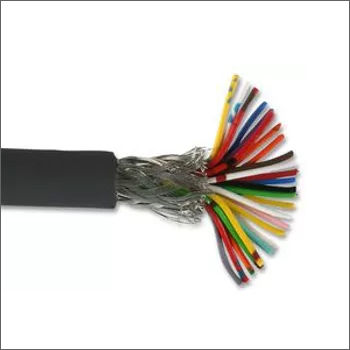
Limited Fire Hazard Cables
10-500 INR/Meter
Product Details:
- Diameter As per cable specification
- Usage & Applications Used in areas demanding fire safety and minimal emission of toxic gases
- Conductor Shape Round
- Number of Conductor Single Core / Multi Core
- Armored Material Optional - Galvanized Steel Wire
- Impedance Standard as per cable type
- Rated Temperature -15°C to +70°C
- Click to View more
X
Limited Fire Hazard Cables Price And Quantity
- 1000 , , Meter
- 10-500 INR/Meter
Limited Fire Hazard Cables Product Specifications
- Halogen-Free, Low smoke insulation
- Optional - Galvanized Steel Wire
- Limited Fire Hazard Cable
- -15°C to +70°C
- Standard as per cable type
- Single Core / Multi Core
- Optional - Aluminium polyester tape
- Round
- LSZH Compound
- LSZH compound / Copper
- As per cable specification
- Red, Blue, Green, Black, Grey (custom options available)
- Used in areas demanding fire safety and minimal emission of toxic gases
- Multiple colors available
- Indoor / Outdoor, Surface / Conduit
- 2.0 kV AC for 1 min
- -15°C to +70°C
- 2 to 4 (custom cores on request)
- 100 m x As per cable diameter x As per cable diameter
- Copper
- Electrolytic Annealed Copper
- Up to +70°C
- 300/500V
- Varies; 1.5 sq.mm to 400 sq.mm
- Commercial Buildings, Metro Rails, Airports, Power Stations, Hospitals
- Instrumentation / Control / Power Cable
- Limited Fire Hazard, Halogen-Free, Low Smoke Emission, Flame Retardant
- 100 meters (standard), customizable lengths available
- >12.5 MPa
- LSZH (Low Smoke Zero Halogen)
- Stranded / Solid
- Depends on size and length
- <0.5% Halogen by weight
- Very Low
- Yes
- Good resistance to acids, alkalis, and oils
- Coils, drums, or as per customer requirement
- IEC 60332-1, IEC 60754-1/2, IEC 61034
- Non-flame propagating, Self-extinguishing
- High flexibility for easy installation
- Meets IEC and EN smoke emission standards
Limited Fire Hazard Cables Trade Information
- 200 , , Meter Per Day
- 4-6 Week
Product Description
We are engaged in providing a wide array of Limited Fire Hazard Cables. These are known for its great advantage due to its affordability and addition of various elastomers. These cables are made extremely flexible material to ensure resistant to heat. They are designed to maintain circuit integrity and continue to work under defence conditions. Limited Fire Hazard Cables are used in heat-shrink tubing to protect wire and cables from any damage or electrical defect.
Comprehensive Fire Performance and Compliance
These cables meet stringent international standards including IEC 60332-1 for flame propagation, IEC 60754-1/2 for minimal halogen gas emission, and IEC 61034 for low smoke output. Their non-flame propagating and self-extinguishing qualities make them ideal wherever fire hazards exist, ensuring occupant safety through reduced smoke and toxic gas production.
Versatile Design for Demanding Installations
Flexible construction, available as stranded or solid electrolytic annealed copper conductors, provides ease of installation in complex routing. Suitable for indoor and outdoor environments including surface as well as conduit installations, these cables perform reliably from -15C to +70C and offer excellent resistance to chemicals, UV radiation, and mechanical stress.
Broad Application Areas
LFH cables are trusted solutions in sensitive areas like hospitals, airports, metro stations, and power stations where uninterrupted operations and human safety are paramount. Their customizable length, core count, armoring choices, and color options make them adaptable to varied modern infrastructure requirements.
FAQ's of Limited Fire Hazard Cables:
Q: How do Limited Fire Hazard Cables enhance fire safety compared to conventional cables?
A: LFH cables are designed to resist flame propagation and are self-extinguishing, which reduces the risk of fire spreading. They emit less smoke and virtually no toxic halogen gases, in compliance with IEC 60332-1, IEC 60754-1/2, and IEC 61034 standards, providing safer evacuation conditions in case of fire.Q: What standards do these cables meet and why are they important?
A: These cables comply with IEC 60332-1 (flame retardance), IEC 60754-1/2 (low halogen content), and IEC 61034 (low smoke emission). Compliance ensures the cables are suitable for installations where fire safety, reduced smoke, and minimal toxic emissions are mandatory.Q: When and where should LFH cables be installed?
A: LFH cables are ideal for use in high-risk or public environments like commercial buildings, hospitals, airports, power stations, and metro rails. Installations where human safety and continued operation during fire incidents are crucial benefit significantly from these cables.Q: What is the process for customizing LFH cables to project requirements?
A: Customers can request LFH cables in various lengths, core counts, and colors. Additional customizations include armoring (galvanized steel wire) and shielding (aluminium polyester tape). The manufacturer supplies cables in coils, drums, or specific packaging as needed.Q: How are LFH cables installed and what are the installation benefits?
A: Thanks to their high flexibility, LFH cables are easy to install in confined spaces, conduits, or surface routes. Their chemical and UV resistance ensures durability both indoors and outdoors. They are supplied in user-friendly packaging, enhancing handling efficiency on site.Q: What are the primary advantages of using halogen-free, low smoke cables?
A: Halogen-free, low smoke cables emit less toxic gas and smoke in fire conditions, greatly reducing health hazards and improving visibility during evacuation. These properties are especially vital in densely populated or high-value premises.Tell us about your requirement

Price:
Quantity
Select Unit
- 50
- 100
- 200
- 250
- 500
- 1000+
Additional detail
Mobile number
Email

Other Products in 'Industrial Cable' category




|


Contact Us
PARAS WIRES (P) LTD
GST : 29AAACP8228L1ZY
GST : 29AAACP8228L1ZY

- 17 Q, Phase-2, Sector - 01, KIADB Industrial Area Bidadi, Ramanagar Dist., Bengaluru - 562109, Karnataka, India
- Phone : 08045814468

- Mr Rupin Surana (Managing Director)
- Mobile : 08045814468
- info@paraswires.net

 Send Inquiry
 Send SMS
PARAS WIRES (P) LTD.
All Rights Reserved.(Terms of Use)
Developed and Managed by Infocom Network Private Limited.
Developed and Managed by Infocom Network Private Limited.

